
Before You Worry ...
If you're planning a trip to the Yukon, whether you're paddling a river, hiking in Kluane, or just driving the Alaska Highway, someone will ask you about bears. Probably everyone will ask you about bears.
Fair enough. The Yukon is proper bear country. Not the kind where a park ranger mentions there might be a bear somewhere in the area. The kind where you are sharing the landscape with thousands of them, and they were there first. Every river, every trail, every gravel bar you camp on is part of their home range.
But the thing that gets lost in the worry: actual bear attacks are extremely rare. If you understand what you're dealing with, take sensible precautions, and know what to do if things go sideways, you can travel safely through some of the best wilderness on the planet.
Two Bears, One Territory
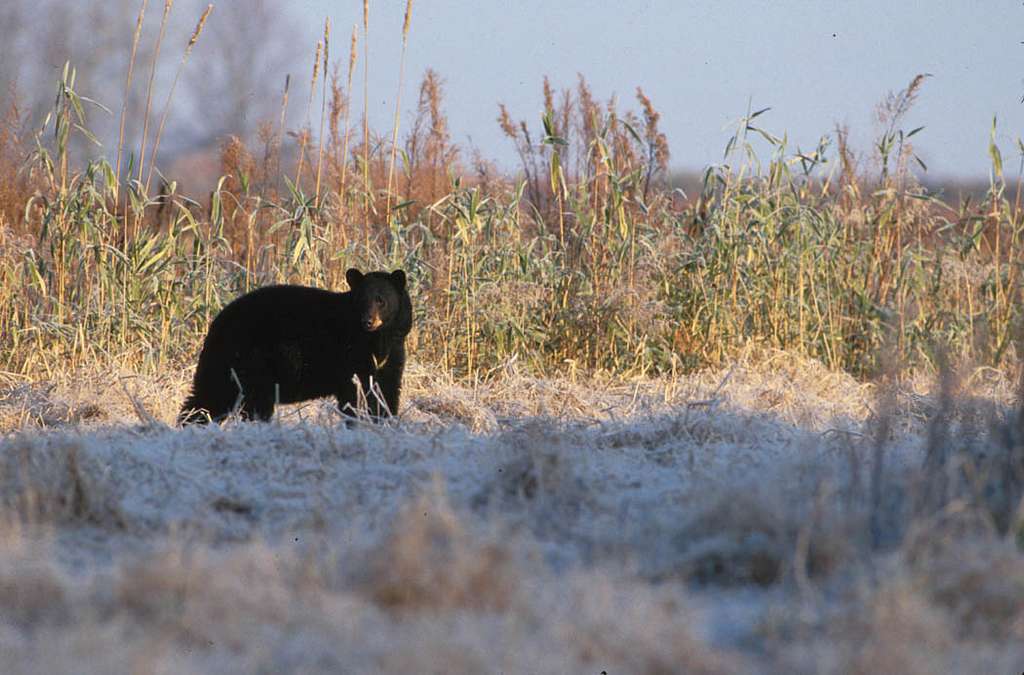
The Yukon has two species: the grizzly bear and the American black bear. Both are common across the territory, and it matters which one you're looking at, because the correct response in an encounter is different for each.
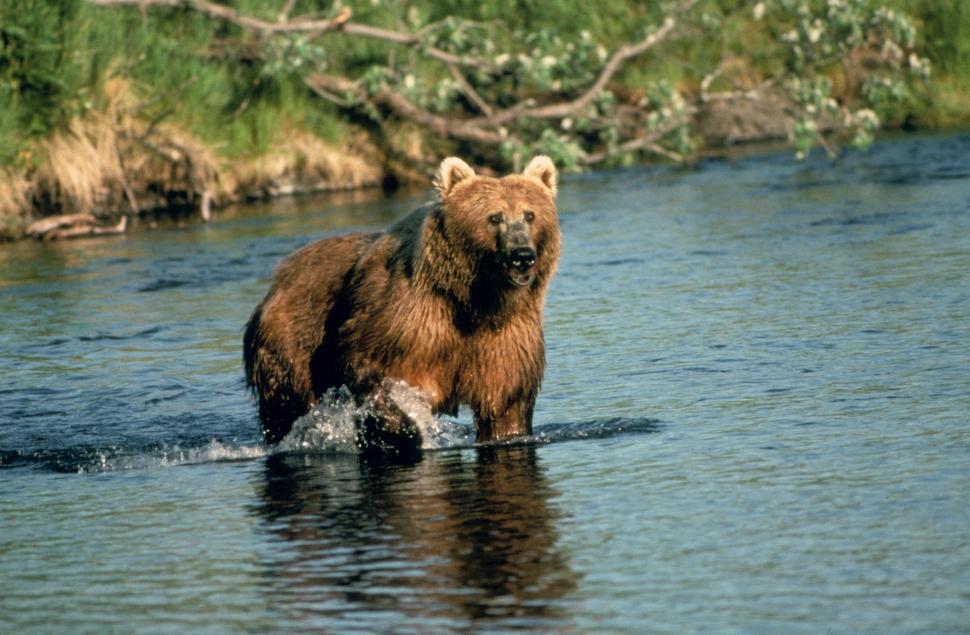
Range: Territory-wide, BC border to Arctic coast
ID features: Shoulder hump, dished face, small rounded ears, long pale claws
Range: Southern border to treeline
ID features: Straight face, tall ears, no hump, short dark curved claws
Watch out: Often brown, cinnamon, or blonde in western Canada
The colour thing trips people up constantly. A chocolate-brown bear along a riverbank could easily be a black bear. Elias filmed one on the Teslin in July and we were sure it was a young grizzly. Nope. Straight face, tall ears, no hump, sleek build. Black bear in a brown coat. If you're going by colour alone, you will get it wrong.
What Bears Are Doing (And When)
Knowing the seasonal patterns helps you understand when and where you're most likely to cross paths.
Bears come out of their dens in April and May, hungry after months of hibernation. They head for south-facing slopes where the snow melts first: horsetails, grasses, willow catkins. This is when you see them most along highways and roads.
Through June and July they move to berry patches, riparian areas, anywhere food concentrates. Both species have low reproduction rates, breeding only every three to four years. Females don't breed until they're seven to nine years old.
Late summer and fall bring hyperphagia: the pre-hibernation feeding frenzy. Bears can eat 20,000 calories a day, foraging 20 hours straight. They're laser-focused on food and, if natural food is scarce, more willing to investigate things they normally wouldn't. Salmon runs, berry patches, and poorly stored human food all become targets.
Most Yukon bears are back in their dens by late October. But late-season encounters do happen. The 2018 tragedy at Einarson Lake involved an emaciated 18-year-old male grizzly in late November that hadn't put on enough fat to hibernate. The investigating conservation officer called it a predatory attack by a desperate animal: a "tragic, chance occurrence" that could not have been prevented.
How Likely Is an Attack?
Bear encounters in the Yukon are common. Bear attacks are not.
Spend any real time outdoors here and you will see bears. They're part of the landscape. Most encounters go exactly the same way: you spot each other, someone moves off, and that's it. The vast majority of bears want nothing to do with you.
Fatal attacks in the Yukon are exceptionally rare. Since the mid-1990s there have been only a few: a hiker in Kluane in 1996, a resource worker near Ross River in 2006, a tour operator at Johnson's Crossing in 2014, and the mother and infant at Einarson Lake in 2018. Across all of Canada, there have been 21 fatal grizzly attacks since 1970. That's less than one a year for the entire country.
The risk is real, but it's small. Sensible precautions make it smaller.
Avoiding Encounters on the Water
On a canoe trip, you spend most of the day on the river, where bears can't reach you. The risk concentrates where you meet the shore: landing, camping, portaging, side-hiking.
Make noise approaching shore. Bears are often along riverbanks, especially in July. Call out, bang a paddle on the gunwale. Pay extra attention at blind corners.
Scout your landing from the water. Look for bears, fresh tracks, scat, digging, fish carcasses before pulling in. If it looks off, paddle to the next spot. On the Yukon, Teslin, or Big Salmon there's usually another gravel bar downstream.
Camp on islands or open gravel bars. Better visibility, less bear traffic than dense bush. Stay away from berry patches, salmon streams, and animal trails to the water.
Manage your food. Store barrels or dry bags 100+ metres from tents. Cook at the water's edge, away from where you sleep. Never leave food in the canoe overnight.
Keep things clean. Fish guts, food scraps, toothpaste, sunscreen, lip balm: all attractants. Clean cooking gear straight away. Wash fish slime off the canoe.
Travel in groups. More canoes means more noise, more presence, lower risk.
Watch portages and creek mouths. Natural funnels where bears and people converge. Make noise on approach.
Check local advisories. Yukon Environment, outfitters, and rangers at put-in points usually have current info on bear activity along your route.
Carry bear spray on your person. On your hip or chest, not in a pack or barrel in the canoe. When you're on shore, it goes with you. Practice the safety flip before you need it for real.
A Word About Dogs
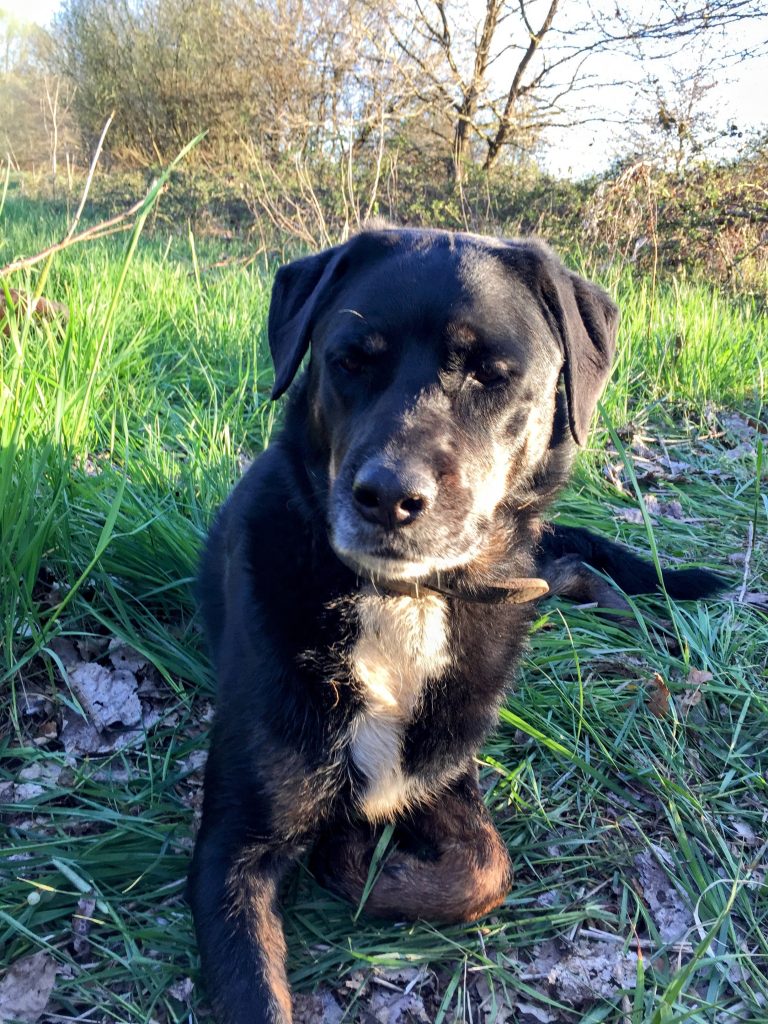
Dogs are a genuine risk factor. A University of Calgary study found that 49 out of 92 studied bear attacks involved dogs. An off-leash dog can bark at and chase a bear, escalate a situation that would have ended with the bear walking away, and then lead the angry animal straight back to you.
If you bring a dog into the backcountry, keep it leashed. An untrained dog in bear country is a liability, not protection.
When a Bear Attacks
This is the part nobody wants to need but everybody should read. The correct response depends on what the bear is doing and why. The two scenarios require opposite actions.
The bear feels threatened
Black bear: Play dead can work. If it keeps going, fight back.
The bear sees you as food
Do not play dead, or you will be!
In any close encounter, bear spray is your first move. Deploy it at four to six metres, aim slightly down, short bursts. You're creating a wall of capsaicin between you and the bear. The hissing, the expanding cloud, and the burning will typically stop the charge.
Bear Spray, Firearms, and the Marlin
The research on this is pretty clear, and it doesn't say what a lot of people expect.
Tom Smith at Brigham Young University led the biggest studies, published in the Journal of Wildlife Management. His team looked at 269 bear-human conflicts in Alaska involving firearms (1883 to 2009) and found that people who used firearms suffered the same injury rates as people who had them but didn't use them. That's a hard number to argue with. Meanwhile, bear spray stopped aggressive behaviour in 92% of cases, with 98% of users escaping uninjured.
The reasons aren't hard to understand. A charging grizzly covers about 15 metres per second. You've got maybe two or three seconds to draw, aim, and hit a vital spot on a fast-moving target. It takes an average of four hits to stop a grizzly. Miss, or hit non-vital tissue, and you've now got a wounded bear that's angrier than before. Even experienced shooters struggle with accuracy under that kind of pressure.
Bear spray doesn't need accuracy. It creates a cloud roughly the size of a car. Point and press. A bear running through that cloud stops. A bear that takes a bullet to the shoulder might not.
To be fair, the research has its critics. Some argue the firearms studies are skewed because they include cases where the gun was present but never fired (no time, jammed, the person tripped). When you only count cases where someone actually pulled the trigger, success rates for handguns climb to 84 to 97 percent depending on which data you use. Alaska's Defence of Life and Property records put injury rates during brown bear charges at under 5 percent.
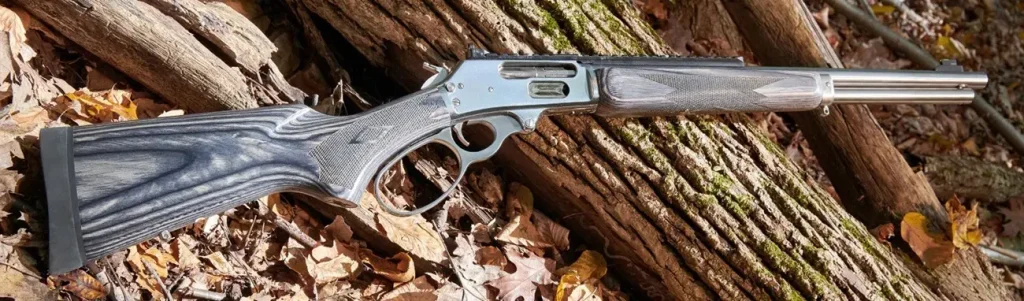
So why do we still carry a .45-70?
If the data says bear spray is the better first option, and we believe it is, then why bother with a rifle at all?
Because bear spray is a one-trick tool. It works brilliantly in one specific scenario: a bear charging you head-on at close range in reasonable conditions. But the backcountry doesn't always give you that scenario. Wind. Rain. A bear that comes through the tent wall at 2am. A second encounter when you've already emptied the canister. A bear that gets sprayed, leaves, and comes back. A moose or wolf situation that has nothing to do with bears. In remote Yukon, days from the road, the rifle isn't for the encounter you planned for. It's for the one you didn't.
Why the .45-70 specifically, and why a lever action? The Marlin 1895 is short enough to handle in brush or from a canoe. A 405-grain hard-cast flat-nose slug at 1,300 feet per second will break heavy bone and penetrate deep. It won't deflect or fragment like lighter, faster rounds. The lever action cycles fast for follow-up shots, faster than a bolt gun under stress. It's mechanically simple: it works in cold, in dirt, in wet. No magazine release to fumble, no safety to forget. And a lever gun rides naturally across the thwarts of a canoe or over a shoulder on a portage in a way that a scoped bolt rifle doesn't.
We carry bear spray as the primary tool, always. The Marlin is the backup for the situation where spray isn't enough or isn't possible. That's not a contradiction. That's covering your bases.
For anyone thinking about carrying a firearm: in Canada, restricted firearms (handguns) require specific authorisation for wilderness carry. Non-restricted (rifles, shotguns) are legal but slow to access in a surprise charge. Minimum for grizzly country is a 12-gauge with slugs or a rifle in .30-06 or larger. Use hard-cast or bonded ammunition for penetration. Hollow points are useless against bears.
Bottom line: bear spray goes on your hip every time. If you're trained and comfortable with a rifle and want to bring it as backup, that's a reasonable choice. But avoidance is the actual primary strategy.
Respect, Not Fear
The Yukon's First Nations peoples have lived alongside bears for thousands of years. In many Indigenous cultures across the territory, bears are treated with deep respect. The knowledge about how to live safely in bear country didn't start with wildlife management brochures. It was built up over millennia by people who shared this landscape with bears every single day.
Bears are not monsters. They're not photo opportunities either. They're powerful, intelligent animals living in their own home range. Your job as a visitor is to pass through with awareness, preparation, and enough humility to recognise you're a guest.
Make noise. Store your food properly. Carry spray and know how to use it. Know the difference between a defensive and a predatory encounter. Check conditions. Travel with others when you can.
Do that, and the Yukon's bears will almost certainly be what they should be: the most impressive thing you see on your trip, from a respectful distance, doing what bears do.