Getting there
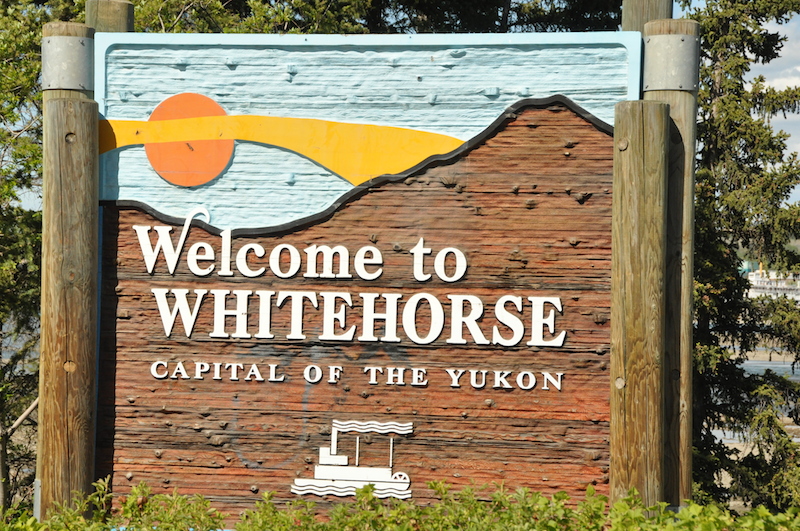
The Teslin/Yukon had long been on our paddling bucketlist. After almost five months of planning and preparation, the time had finally come on 28 June. We flew via Vancouver to Whitehorse, the capital of the Yukon Territory. Capital should actually be in quotation marks here, as the Yukon’s population of just under 40,000 is spread generously over an area the size of Germany, Switzerland and Austria combined. Whitehorse exudes the (very brittle) charm of a frontier town. We spent the next two days and nights digesting the 9-hour time difference, organizing the inevitably missing bits of gear, shopped basic foodstock for two weeks and indulged in a little final culinary pampering before setting off for Johnsons Crossing on the 30th.
Johnson's Crossing
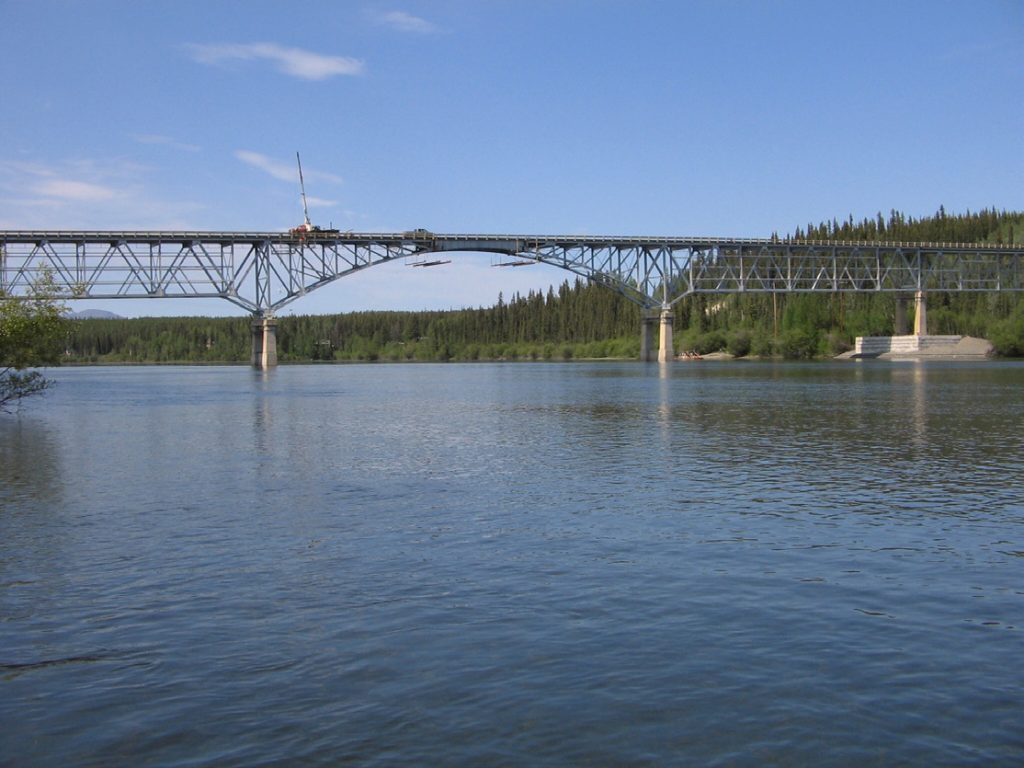
Johnson’s Crossing marks one of the most strategically important points on the Teslin River. Located where the Alaska Highway spans the river, it has long served as a logistical node; first for river travelers, later for road traffic. The origin of the name is debated: it may refer to Teslin Tlingit Chief George Johnston, who built a short road and operated a taxi service in the 1920s despite there being no proper roads in the community, or to Colonel Frank Johnson of the Corps of Engineers during construction of the Alaska Highway in 1942. Today, Johnson’s Crossing represents the transition from river frontier to highway infrastructure—a place where northern travel shifted from paddle and paddlewheel to diesel and asphalt, while the Teslin continues to flow quietly beneath the bridge. We arrived under the bridge just in time for our last “real” breakfast at the Johnson’s Crossing lodge. GREAT Pancakes!!
Shakedown
We had planned only a relatively short ‘shakedown’ for this day, so we set up our first camp after just 25 kilometres. Many of the camps have been in use for more than a hundred years, and even though they offer nothing more than a clearing in the otherwise dense riverside forest, they make camp life a lot easier.
That evening, the Yukon taught us our first (of many) lesson: as practical and handy as a wilderness hatchet may be, it is advisable to take a ‘proper’ axe with you for the Yukon. The wood of the typical spruce and pine trees is not very productive, and you need considerable amounts of wood just for cooking fires. Although there is often enough dry driftwood to be found along the shore, it is even less productive.
Our main source of protein for the next 3 weeks would be fish but on that first evening we had the gigantic t-bone steaks we had bought in Whitehorse before our departure with an absolutely passable California red.
Although it doesn’t get completely dark at this time of year and you could still read a newspaper without much difficulty at 3 a.m. in the remaining light of the sun just below the horizon, we slept for almost 9 hours on this first night.
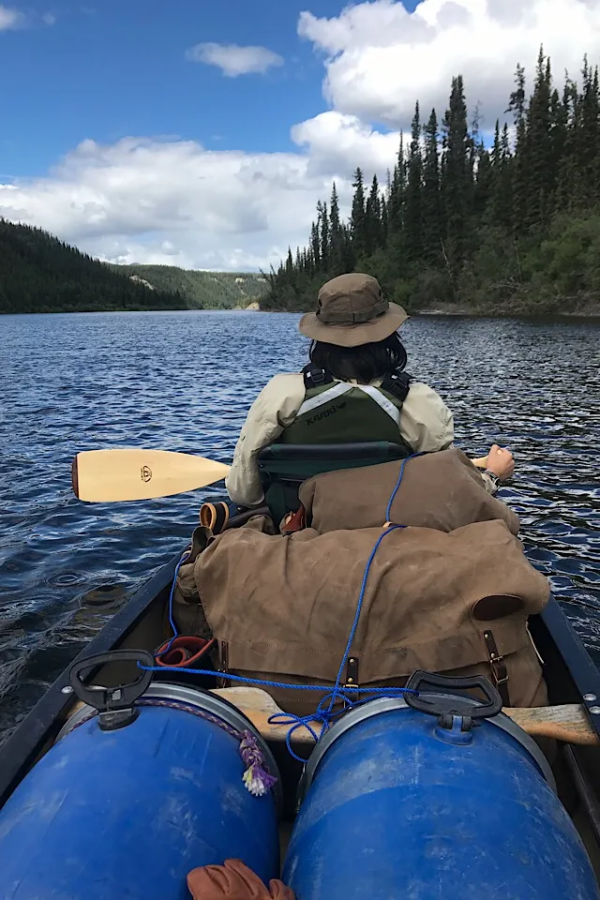
The next morning greeted us with crisp clean air and lots of sunshine and we took some time to have a hearty breakfast with bannock and honey, reorganise our gear before setting off on our first full day of paddling on the Teslin river.
Headwinds and a nightly visitor
The next few days brought us extremely unpleasant headwinds of force 4-5, with gusts of force 6, on a river that has only a low flow velocity in this area. We couldn’t make any real progress and were repeatedly blown sideways, which caused us a lot of frustration. After only 20 kilometres (in 6 hours!) on the first of the two days, we gave up, set up camp, wolfed down one of the travel meals we had brought along for evenings like this, took our food containers out of the camp and went to sleep. Our muscles had not yet got used to paddling and we felt exhausted and sore.
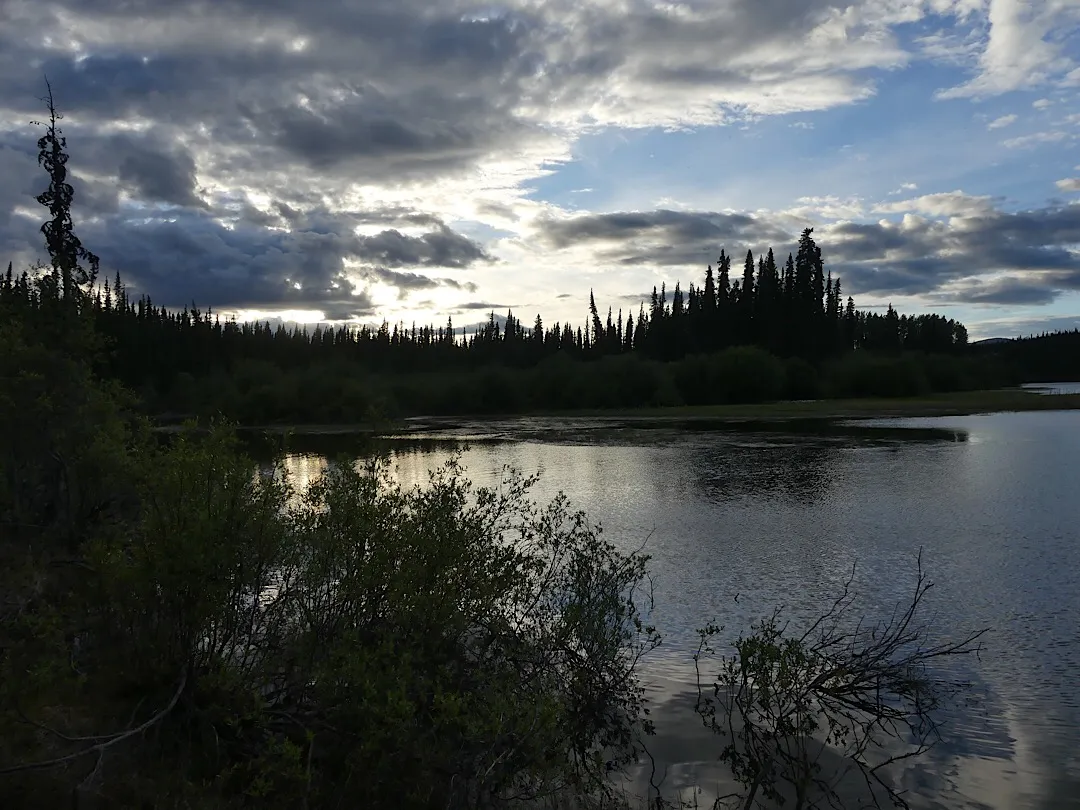
At 2 a.m., I woke up to cracking noises around our camp. Was it a bear? I didn’t really feel like going out to check, but staying in my sleeping bag was not an option, so I put on my headlamp, grabbed our Marlin 1895 and left the tent. The crackling was still there, but now it no longer sounded like the breaking of large branches as I had perceived it in my half-sleep, but like that of a smaller animal making its way through the undergrowth. The bear turned out to be a porcupine, which crossed our camp without undue haste.
Relieved and smiling, I sat down on the bank and enjoyed the view:
Lesson #2
At the start of each of our trips, I repeat a few basic rules for the wilderness to my son and other participants like a mantra. One of the most important, especially in a remote area where help is, at best, a day or two away, is: move carefully and avoid unnecessary risks. One such unnecessary risk, for example, is going to the river in the morning, half asleep and wearing only neoprene socks on your feet, to wash.
A few days into the trip, I slipped in the mud on the bank of the Teslin and twisted my right ankle with an audible ‘crack’. My first thought was: anything but a torn ligament. Elias was still asleep and only came down to the river after I called him several times.
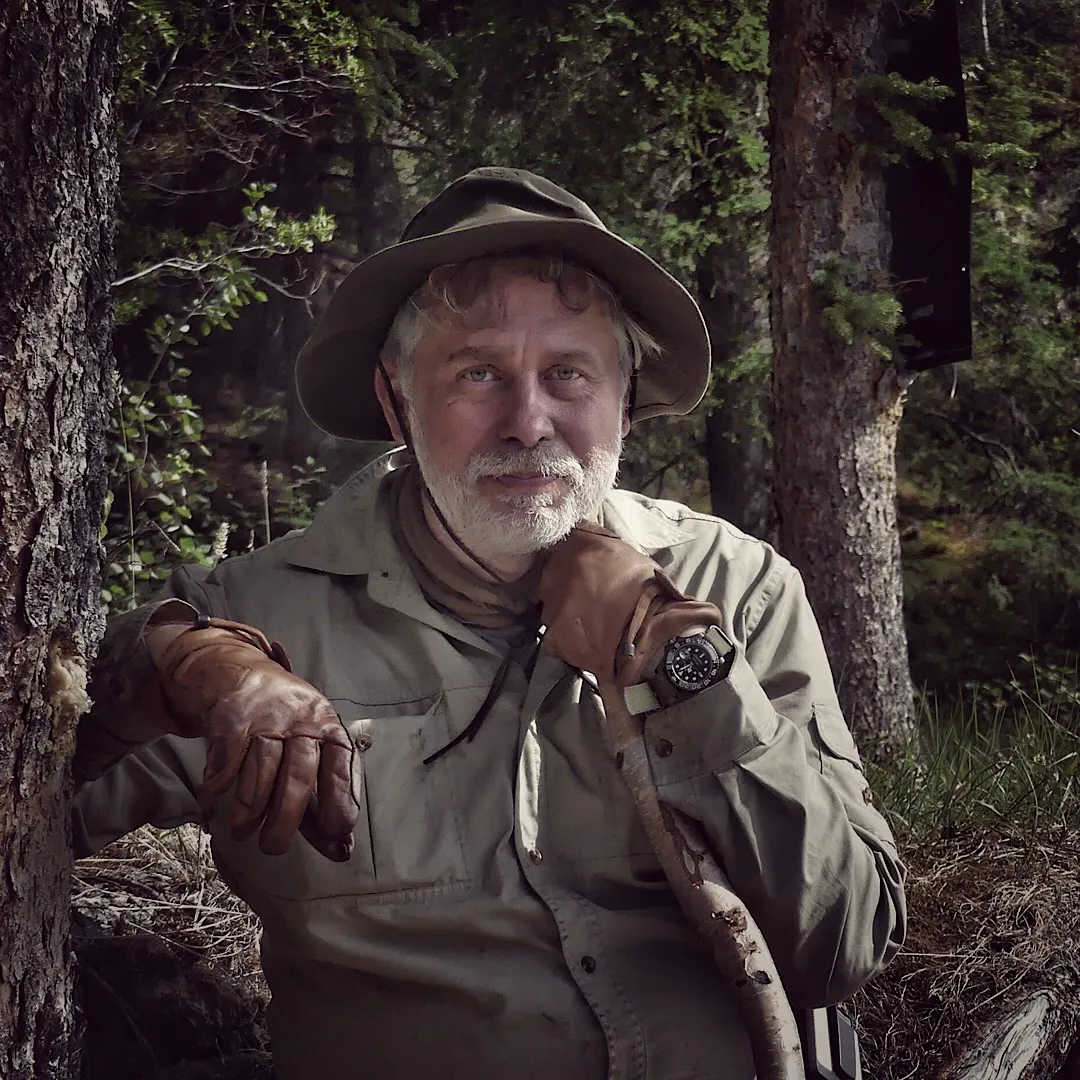
In the meantime, I had cooled my ankle in the cold river water. Elias brought me our medical bag and my heavy wading boots for fly fishing. With a tight bandage, neoprene socks, tightly laced wading boots and enough ibuprofen, I was able to walk slowly with the help of a stick.
If it turned out that it was indeed a torn ligament, I wanted to be as close as possible to 100 Mile Landing. There were a few cabins there that were partly inhabited in the summer, and the best chance of finding a motorboat that could get us back to Johnson’s Crossing within a day if necessary. Elias broke camp on his own, loaded the 80 kilos of gear and food into the canoe, and helped me get in. The ibuprofen took effect and we were in 100 Mile Landing within a few hours, where Elias set up camp. In the meantime, I took a look at my foot. I was relieved to find that it wasn’t a torn ligament, but probably just a bad sprain. The bruising was manageable and I could move my foot with tolerable pain. Nevertheless, we decided to take a day off.
100 Mile Landing
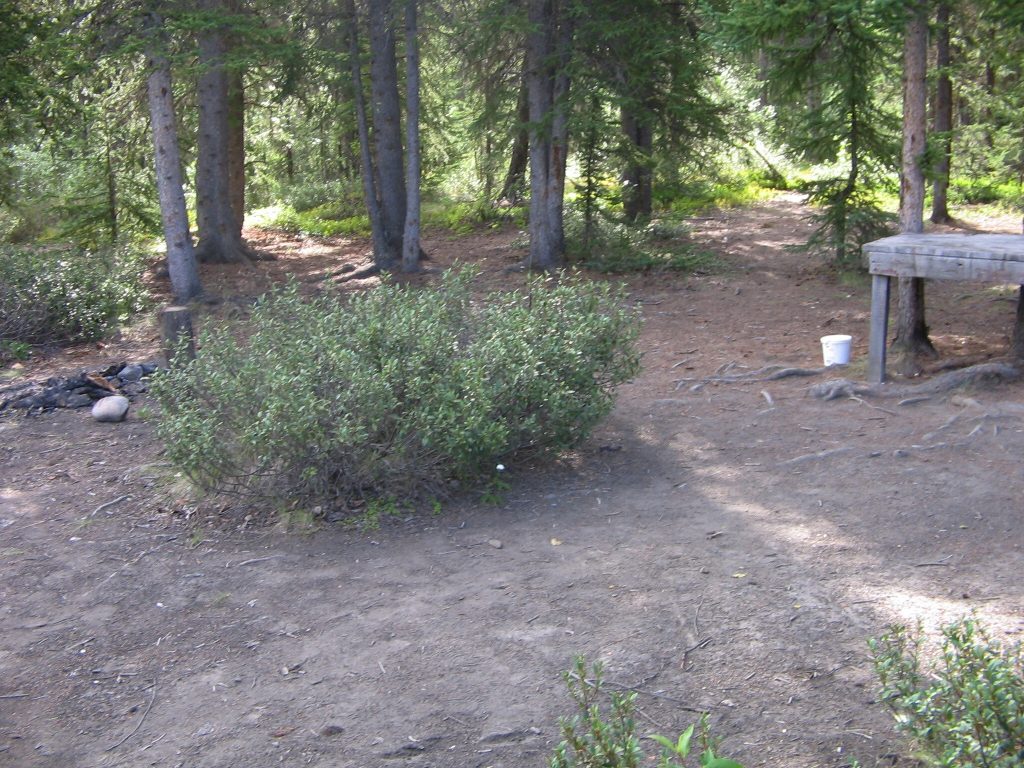
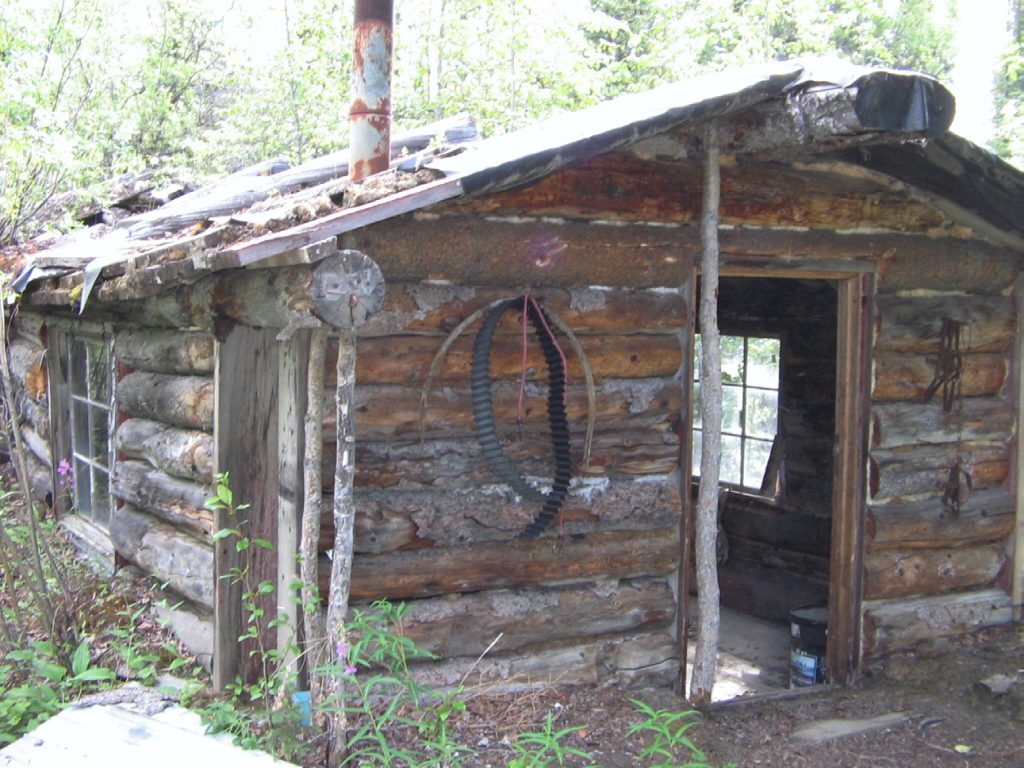
100 Mile Landing developed as a modest but persistent riverside settlement during the Teslin’s gold era. Like many such sites, it attracted not only prospectors but also individuals seeking to establish more permanent livelihoods once the initial rush subsided. In 1914, Joseph C. Brewer, a 55-year-old former worker from the Livingstone district, applied for a 160-acre homestead here. By 1918 he had cleared roughly ten acres, cultivated about one acre, and constructed a cabin, outbuildings, and fox and mink pens—shifting from mining toward small-scale agriculture and fur farming.
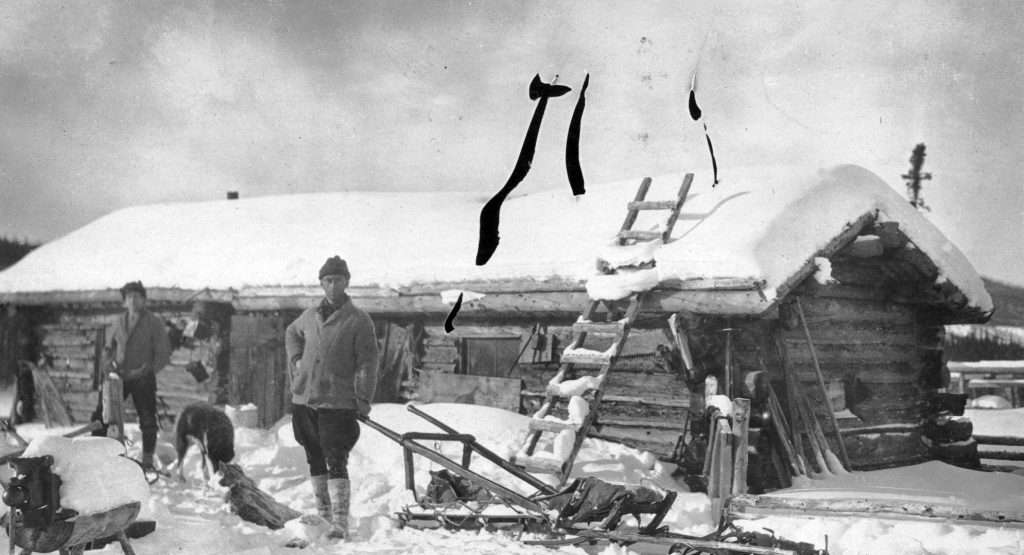
The archival photographs from 1922 show a substantial log structure and winter activity at the site, underscoring that this was more than a temporary camp. Yet isolation, harsh climate, and limited economic prospects took their toll. A note from 1924 indicates Brewer had left the territory due to poor health and was unlikely to return
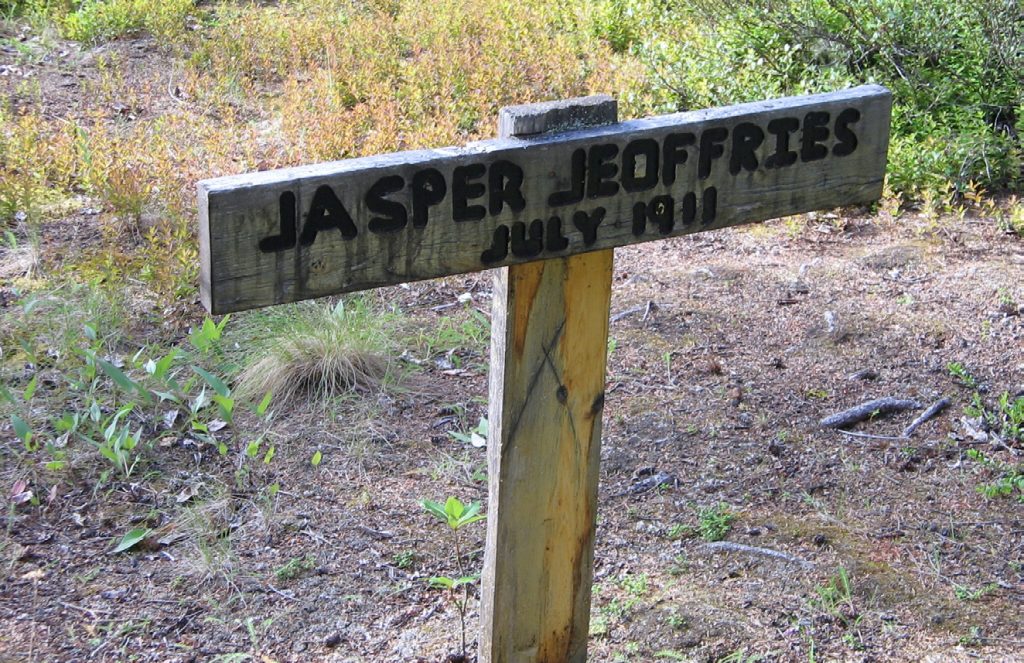
Today, the location is marked by collapsed buildings, decaying fox pens, and several grave outlines, including that of Jasper Jeoffries (d. 1911), whose burial reflects the stark realities of life—and death—along remote northern waterways.
What remains at 100 Mile Landing is not a ghost town in the dramatic sense, but a quiet archaeological footprint.
Our first bear encounter
A bit on bears
Someone told us that, while bears (both black and brown) are abundant on the Teslin, encounters are actually rare. Nope, they are not and they were clearly talking out of their ass. We saw about half a dozen black bears and two grizzly bears. Only one of them got too close for (our) comfort and, of course, it had to be a grizzly. A young male made an approach while we were fly fishing for grayling at Miller Creek. We later realized that we had missed his scat when we landed on the gravel bank (see below!). He got within about 30 meters of us and Elias was getting ready to fire a warning shot, as we mostly avoided leaving camp alone and unarmed (or at least not withour bear spray), but after some huffing and puffing he decided that we were not worth it and ran off into the shallows. But he did stick around in the area and we didn’t sleep great that night.
A lot has been written about how to behave when paddling in bear country and what to do when things get hairy. Here’s our take in a blog article:
Paddling with Bears in the Yukon: What You Need to Know
Before You Worry … If you’re planning a trip to the Yukon, whether you’re paddling a river, hiking in Kluane, or just driving the Alaska Highway, someone will ask you about bears. Probably everyone will ask you about bears. Fair enough. The Yukon is proper bear country. Not the kind where a park ranger mentions there might be a bear somewhere in the area. The kind where you are sharing the landscape with thousands of them, and they were there first. Every river, every trail, every gravel bar you camp on is part of their home range. But the thing that gets lost in the worry: actual bear attacks are extremely rare. If you understand what you’re dealing with, take sensible precautions, and know what to do if things go sideways, you can travel safely through some of the best wilderness on the planet. Two Bears, One Territory The Yukon…
Picking up Speed...
Around km 150 the Teslin tightens up and you feel the difference straight away. The current jumps to about 7 km/h and does half the work for you. The weather finally turned for us here too. There’s a decent camp spot on river right just past where the Swift River comes in. Worth noting if you’re running out of steam.
At km 137 the Mary River joins and the Teslin starts throwing proper meanders at you. Pick your lines. We worked the outside of the bends and it seemed to pay off, faster water and fewer shallow spots.
Took another hour before we found anything usable. River right, around km 115, slightly raised and out of the wind. Nine hours, 60-odd kilometres. That was enough.
Fishing was great that evening and we caught 6 arctic graylings on elk hair caddis.
A Bull, a Bear and O’Brien’s Bar
The Teslin has found its pace and so have we. The meanders swing wide through here, cutting into high banks where the sand has weathered into hoodoos. Strange pillars standing along the bluffs like something out of a desert, except everything around them is boreal forest.
Five clicks downstream you hit the Roaring Bull Rapids. Ignore the name. It’s a bouncy wave train, maybe thirty seconds of paying attention, and that’s it. Only whitewater on the whole Teslin. We whooped through it and wished it was longer.
Right after the rapids, river bending right, left bank, twenty metres out. A mid-sized black bear standing there staring at us like we’d wandered into his kitchen. We stared back. He held it for a few seconds, decided we weren’t interesting enough, and wandered into the willows. That was it.Past km 75 the river loses its curves and some of its push. Back to work. We grind out the last stretch and land at Brien’s Bar Camp around two, river left on a slough.
The place is named for Thomas O’Brien, a character who was already well established here before the Klondike rush even started. His main enterprise was moonshine. That funded everything else, including a gold mining operation that at its peak had 35 men working the Teslin gravel. By 1935 he’d had a full dredge shipped in. The man wasn’t messing around.
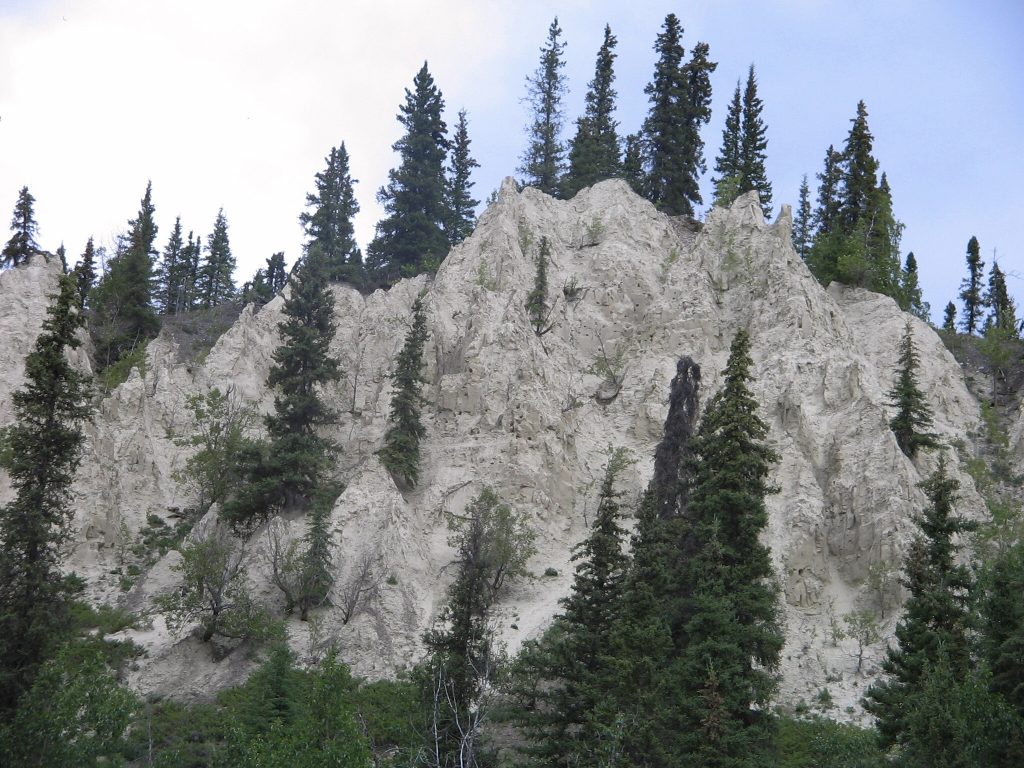
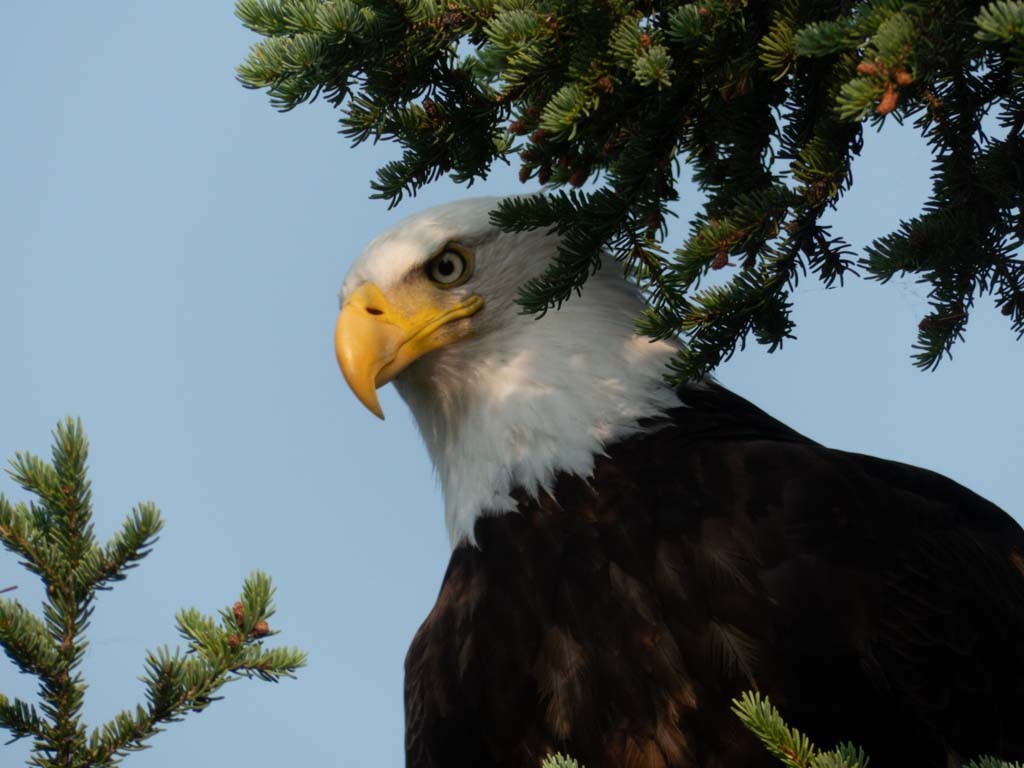
Between 100 Mile Landing and Roaring Bull Rapids, the Teslin flows broad and easy through a generous valley. The river sweeps in long bends past wide gravel bars that seem to invite frequent stops. The current is steady and dependable, carrying you along without much effort. Moose move quietly through the willow thickets along the side channels, and bald eagles circle high above the open gravel bars. A few miles before “Roarding Bull Rapids” we encountered our first bear. Despite the brownish coat, this is a black bear.
Hootalinqua
Hootalinqua hits you before you expect it. The Teslin swings around a bend and suddenly there’s another river right beside you. The Yukon, coming in from the left, bigger and muddier. For a stretch the two run side by side without mixing, a clean line down the middle where brown meets green. Then they merge and you’re on the Yukon proper. That’s a moment.